
Find People Across Saratoga Springs
The best starting point depends on what is known. A full or partial name can lead to a Utah County owner record, a Utah court case, a state license, or an unclaimed property entry. A street address can lead to a parcel serial number, then to owners and recorded deeds. An older family name may call for Utah County vital registers, State Archives catalogs, or regional history books because Saratoga Springs did not incorporate until December 1997.
Use more than one record trail before deciding two entries identify the same person. Names repeat. Mailing addresses can differ from the physical property address, and a court party may have moved since filing. Build a small timeline from the records that agree.
- Search the Utah County owner roll by surname, then by the full indexed form.
- Open the parcel and abstract tools to connect an owner, address, and deed chain.
- Check Utah Courts Xchange by party name, court, case type, and date range.
- Use state license, business, custody, or unclaimed property tools when the facts point there.
- Ask the correct custodian for a narrow record set when the online trail ends.
Use Saratoga Springs records only for lawful personal research. Utah law prohibits stalking, harassment, threats, and harmful misuse of identifying information.
Saratoga Springs Records Office Trail
Saratoga Springs has no single records desk for every people search. The city Recorder keeps municipal ordinances, contracts, council proceedings, licensing material, annexation notices, and historical city documents. Utah County keeps deeds, ownership rolls, tax data, marriage licensing, and county election records. Utah courts and state agencies hold broader case, license, voter, vital, and custody files.
The city is not the county seat. County offices are in Provo, so an online no-hit may require a call, email, or counter visit there. The complete access-law and copy process appears with the Saratoga Springs public records system.
Utah County Recorder
100 E Center Street, Suite 1300
Provo, UT 84606
801-851-8179
Utah County Clerk / Elections
100 E Center Street, Suite 3100
Provo, UT 84606
801-851-VOTE (8683)
Saratoga Springs Recorder
319 S. Saratoga Road
Saratoga Springs, UT 84045
801-766-9793 ext. 192
Search Saratoga Springs Owner Records
Utah County Land Records is a strong first name index. Its owner form accepts a surname alone or the format “Last, First Middle.” The record-scope choice matters. “Current Records Only” finds present parcel links, “All Records” expands the trail, and “Never Valid Only” can reveal retired parcels and former ownership. That last option is unusually useful in a city shaped by new subdivisions and parcel splits.
The Utah County Land Records portal shows the broad menu used for a Saratoga Springs name search:
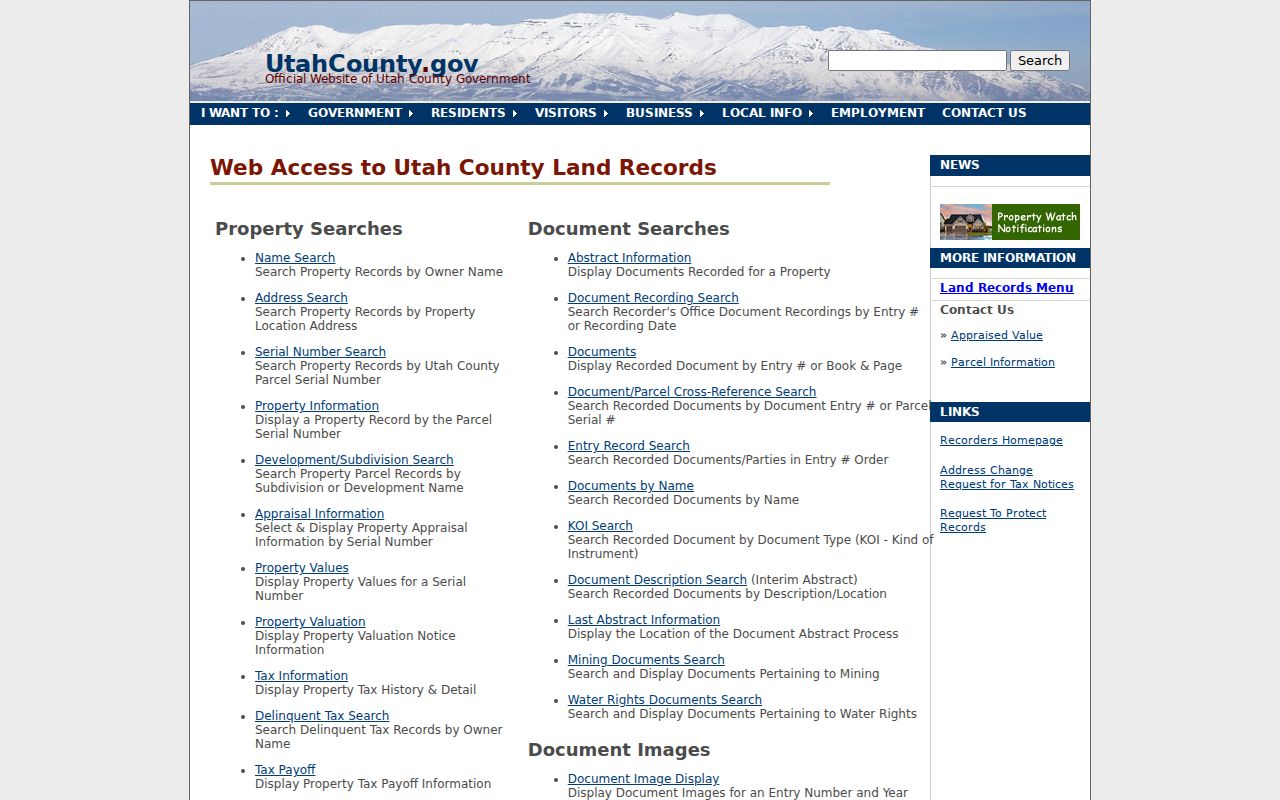
The portal connects owner, address, serial number, tax, parcel map, abstract, document, and image tools. Fully searchable property abstracts cover 1985 to the present. Earlier title work moves to Recorder staff and the county’s older abstract-book, plat, REDI, and image collections.
| Owner search control | Entry | Best use |
|---|---|---|
| Name | Last, First Middle | Current or former owner trail |
| All Records | Scope choice | Every indexed ownership link |
| Current Records Only | Scope choice | Present parcel relationships |
| Never Valid Only | Scope choice | Retired parcel relationships |
Note: An “ET AL” display means more owners exist, so request the full ownership set from the Utah County Recorder.
Map Saratoga Springs Address Trails
A physical address, called the situs address in property records, may not match the owner’s tax mailing address. Begin with the county address form or map autocomplete. Then capture the nine-digit parcel serial, open the property and tax pages, and compare the title names with the mailing destination. If the parcel lacks a street address, search by owner, serial, subdivision, legal description, or Public Land Survey System location.
The Utah County Parcel Map accepts addresses, parcel serials, book and page references, owner names, cities, and survey coordinates:
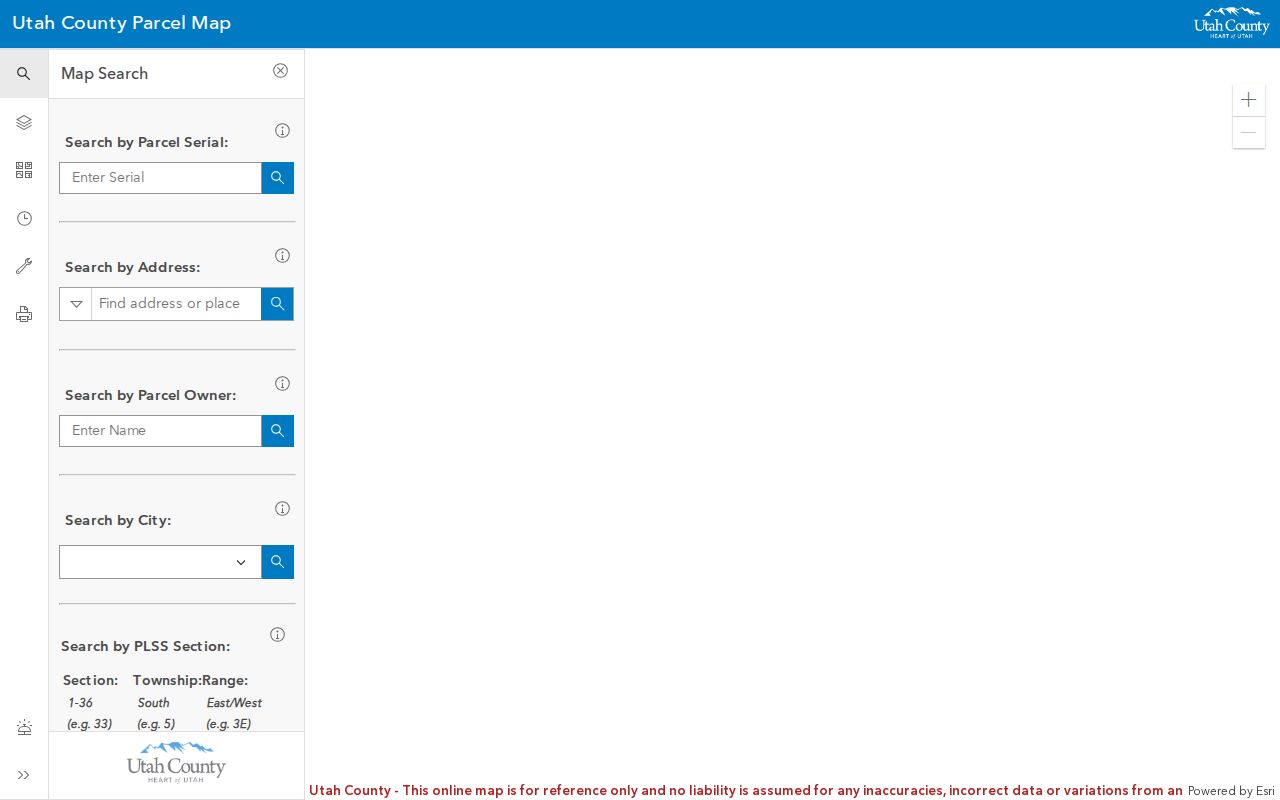
Historic parcel views can explain a split or boundary change. Their dates reflect entry into the online property system, not the legal recording date. Use the deed abstract and recorded instrument for the legal sequence.
- Parcel
- A mapped unit of land identified by a county serial number.
- Situs address
- The physical site, which may differ from the tax mailing destination.
- Abstract
- A condensed chain of recorded documents tied to the parcel.
- Grantor and grantee
- The party transferring an interest and the party receiving it.
Saratoga Springs Court Name Search
Local and state court trails split by case type. Saratoga Springs Justice Court handles limited traffic, ordinance, misdemeanor, and small-claims matters. It is a non-record court, a term about its appellate structure rather than a claim that it keeps no files. Felony, probate, divorce, broader civil, and family matters go to Utah’s Fourth District Court.
The public Utah Courts Xchange service searches party or company names with filters for jurisdiction, court, county, case type, date, and judgment:
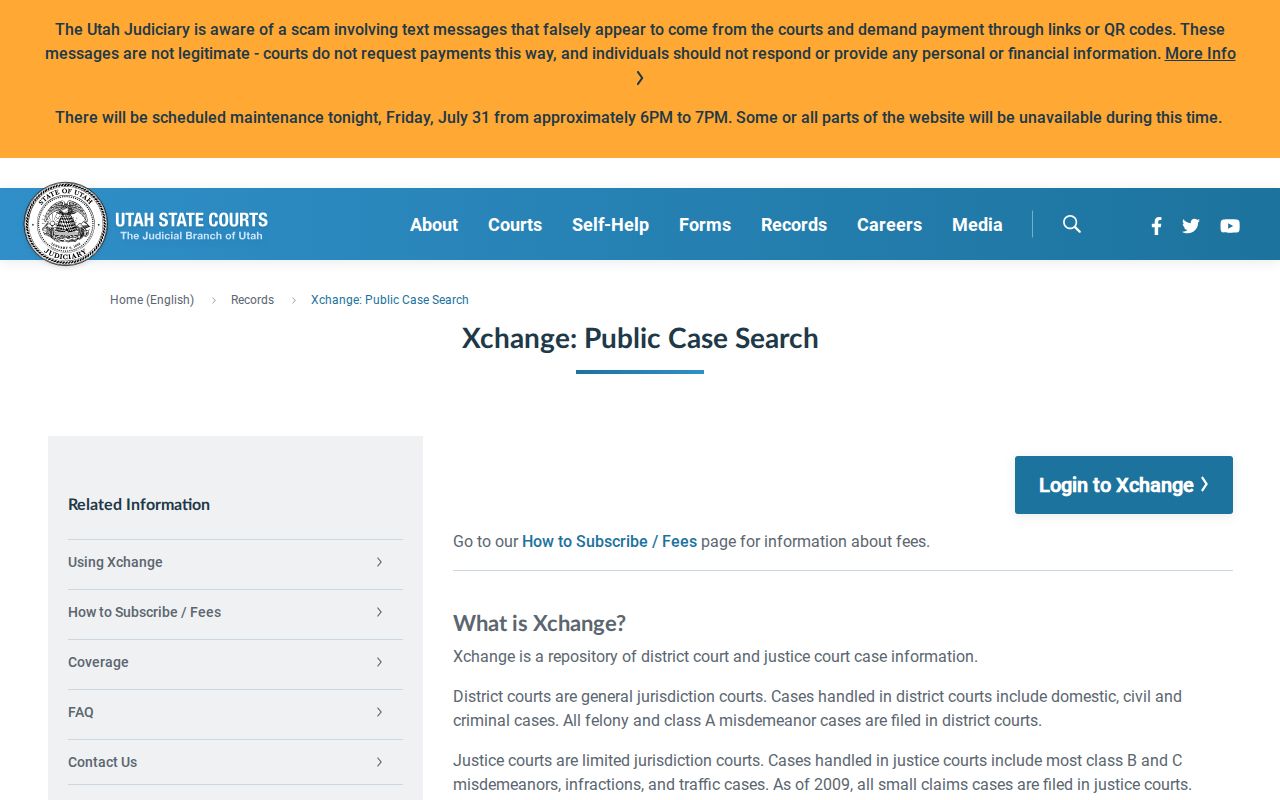
A result can identify the court, case number, filing date, parties and roles, charges or claims, judge, disposition, proceedings, balances, and public documents. Xchange limits results and charges online fees. Most district courthouses and the Utah State Law Library offer free public Xchange terminals. MyCase is different: it gives a verified party access to that person’s own case.
| Search system | Saratoga Springs scope | Access route |
|---|---|---|
| Justice Court | Limited local cases | Xchange or local clerk request |
| Fourth District Court | General civil, felony, family, probate | Xchange, free terminal, or clerk |
| District of Utah | Federal civil, criminal, bankruptcy | PACER or federal clerk |
Trace Saratoga Springs Probate Heirs
Probate records can connect a deceased owner to heirs, a personal representative, a guardian, or a conservator. Xchange expressly indexes several of those party roles. Search the decedent’s surname with a date range and narrow the court to Fourth District when possible. A case row is discovery metadata, meaning a short index entry that points toward the fuller file.
Some probate orders, public hearing minutes, and appointment letters may be open even when another related file is restricted. Ask the Fourth District clerk for the public parts by case number. Do not treat a name match alone as proof of kinship. Compare it with a deed, death record, address, and the chronology in the case.
Short route: decedent name → Xchange probate role → case number → Fourth District public file → deed or vital-record cross-check.
Saratoga Springs Vital Record Routes
Utah’s Office of Vital Records and Statistics and local health departments issue birth and death certificates from 1905 forward. The state issues marriage and divorce abstracts for 1978 through 2010. Outside that span, use the Utah County Clerk for marriage material and the Fourth District Court for divorce files. Eligible requesters can order online, by mail, or through a local health department in person with identification and relationship proof when required.
Public access follows different clocks under Utah Code §26B-8-125 and state archive schedules: 100 years for birth, 50 for death, and 75 for marriage or divorce. Utah County birth and death registers from 1898 through 1905 bridge part of the earlier period. Older open material then shifts to Utah State Archives catalogs and digital collections.
As of July 1, 2026, the first certified birth, marriage, or divorce search costs $25, while the first death certificate costs $35. The fee is retained if no record is found. A June 2026 state alert reported about a six-week online and mail backlog, so an eligible requester may wish to ask the local health department about in-person service.
Check Saratoga Springs License Records
A name connected to a trade or company may appear in several official systems. Utah’s corporations search links entities to registered principals or agents. The Division of Professional Licensing verifies a licensee’s profession, number, status, expiration, and published discipline information. Saratoga Springs business applications add a city route, but no complete public city license register was verified. Ask the Recorder or Business License Administrator for a specific business, address, or period.
The Utah professional license lookup provides the statewide verification form:
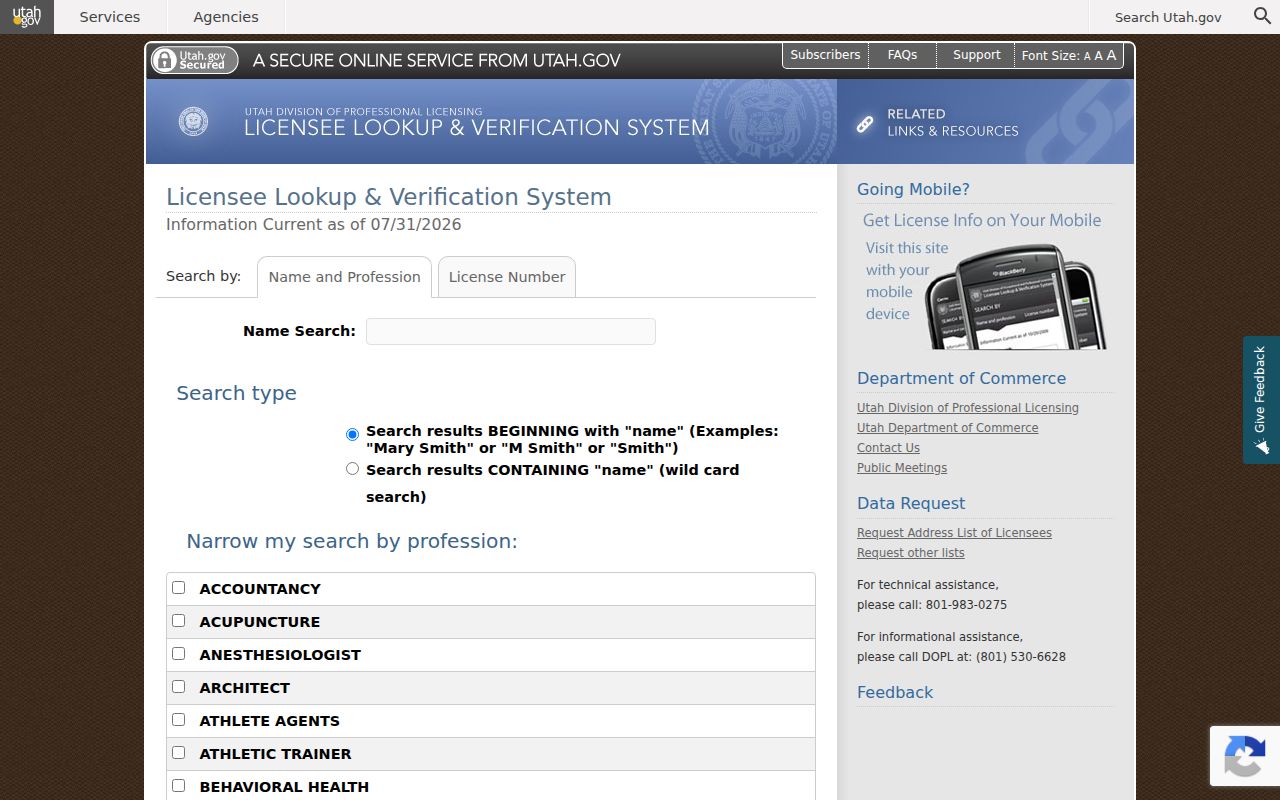
Use a license number as the strongest match when it is known. A similar name is only a lead. For a business, compare the entity status, agent or principal, city application, regulated license, permit address, and filing dates before joining the records.
Saratoga Springs Custody Search Choices
Choose the custody tool by population. The Utah County Sheriff search focuses on county bookings and current inmates, and the research notes a 24-hour booking delay. Utah Department of Corrections searches people currently incarcerated, on probation, or on parole. Utah VINE supplies custody status and optional release, escape, death, or transfer notices. Federal custody uses the Bureau of Prisons locator.
A county no-hit soon after an arrest is not conclusive. Search again after the stated delay, try the indexed “LAST, first initial” style, and confirm the arrest date. For Saratoga Springs cases, the county code “SSJC” refers to the city Justice Court. Custody data changes quickly, so the agency remains the source for current status.
Rebuild Pre-1997 Saratoga Springs Names
John Beck opened the Saratoga resort near the Jordan River mouth in 1884, but the municipality did not exist until 1997. That gap creates two record eras. Newer trails add city planning, licenses, elections, permits, minutes, and annexation papers. Older residents are more likely indexed under Utah County land, vital, census, church, newspaper, or nearby community records.
The Saratoga Springs Public Library publishes its catalog and Utah Online Library access, but it does not list exact years for local phone books, reverse directories, obituary indexes, or newspaper microfilm. Ask staff for a specific title and year rather than assuming a collection. BYU offers public virtual family-history help, books, databases, microfilm, and more than 36,000 digitized family-history works moved to FamilySearch Books.
Utah State Archives adds Utah County birth and death registers for 1898 through 1905, marriage applications, government series, name indexes, and digital images. Provo City Library’s digitized 1884 regional directory can supply regional context, but it should never be labeled a Saratoga Springs city directory.
Search Saratoga Springs Annexation Records
Saratoga Springs runs more than eleven miles along northwest Utah Lake and has added large areas through annexation. A present address may once have sat in unincorporated Utah County or used a different nearby place name. When an address fails, keep the numeric directionals, then try the parcel serial, subdivision, legal description, and historic parcel layer.
Utah State Archives Series 20220 preserves incorporation, annexation, disconnection, plat, boundary-map, and city-class records. It has a documented 2004 through 2006 gap and moved to electronic records in 2011. These maps help establish which government covered the site at a given time. A deed’s recording date remains the legal timeline for ownership.
Note: ZIP code 84045 is a delivery area, not proof that a parcel sat within the city boundary on an earlier date.
Saratoga Springs Voter Lookup Limits
The official Utah voter tool is for a voter to check that person’s own status and polling location. It is not an open browse-by-name directory. Public voter-file access follows a different route through the Lieutenant Governor for the statewide product or Utah County Elections for a Saratoga Springs, precinct, county, or district subset.
Public fields can include name, statutory age range, address, districts, party status, active or inactive status, update date, and election participation. Participation history never shows selections. Full birth dates, identification numbers, Social Security numbers, email, and phone stay protected. Qualifying at-risk voters can also withhold identifying registration data. The full process and request options are covered in Saratoga Springs voter records.
Saratoga Springs Unclaimed Property Search
Unclaimed property can reconnect a name with a former address, co-owner, or business holder when other current sources go quiet. Search broad name variants first, then compare the reported owner or co-owner and holder details with known places or dates. A search result is not proof that the funds belong to the searcher. The claim stage requires identity and ownership evidence.
The official Utah Unclaimed Property search offers free name discovery and the state claim route:
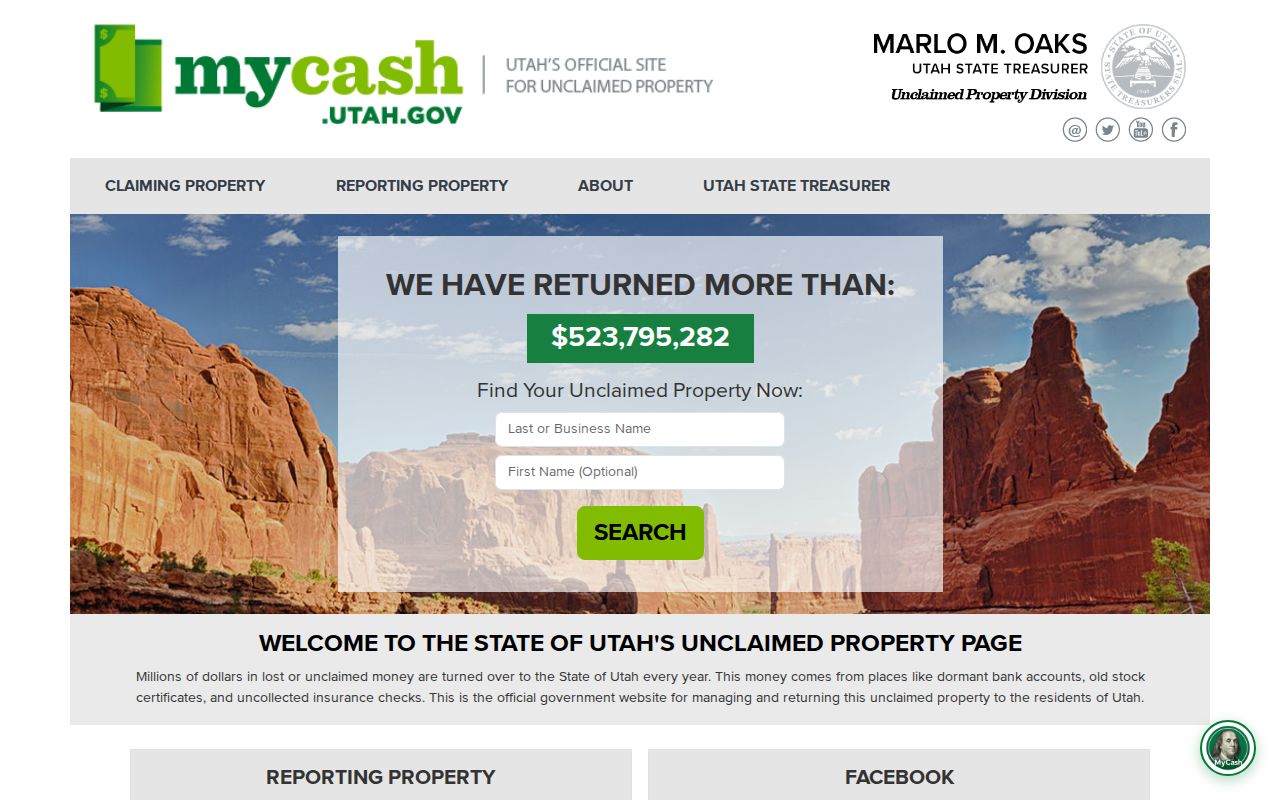
Use this trail as a cross-check, not a current address directory. Holder names and older ownership facts can be valuable, but they may reflect a past account or a former Saratoga Springs connection.
Saratoga Springs GRAMA Search Fallback
When a public record is not posted, send the request to the entity that keeps it. General city material goes to the Saratoga Springs Recorder, police material uses the city’s NextRequest channel, and Justice Court material uses the court form or clerk. County land questions go to the Recorder, value questions to the Assessor, tax questions to the Treasurer, and broader court files to the correct clerk.
A useful request states the record type, name variants, narrow date range, address or parcel, department, and any case, permit, entry, book-page, license, or incident number. Ask for electronic production, identify whether inspection or a copy is needed, and set a cost ceiling. Utah GRAMA generally gives an entity 10 business days, or five when a supported expedited request primarily benefits the public. Free inspection and the first 15 minutes of search time are generally protected by the statute, subject to its exceptions.
If the entity does not retain the record, ask it to identify the likely holder. Keep the request, receipt date, response, classification, and appeal notice if access is denied. The Utah Open Records Portal and Government Records Ombudsman can help route requests and explain appeal steps.
Avoid False Saratoga Springs Matches
No official portal is a universal people index. A missing result can mean the wrong custodian, a coverage gap, delayed posting, an old city name, a privacy rule, a spelling variant, or a retired parcel. A positive result can also mislead. A tax owner may not live at the parcel, a docket line is not the whole file, an abstract is not a certified deed, and a historic map date is not a recording date.
Preserve the indexed spelling, then test surname-only forms, middle initials, wildcard options, entity suffixes, former-owner modes, and nearby geography. Confirm a possible identity with at least two independent facts such as a parcel, case role, license number, spouse or heir relationship, and a date that fits.
Commercial compilation tools can mix stale public and private data or combine two people. Official custodians provide the sounder trail, while certified copies establish the office-issued version of a record. Even then, a certification does not guarantee that every statement made in the original filing was correct.
| Source type | Best role | Main caution |
|---|---|---|
| Official custodian | Current index, direct copy, or certification | Each office covers only its own records |
| Commercial compilation | Broad preliminary discovery | May be stale, incomplete, or merge names |